
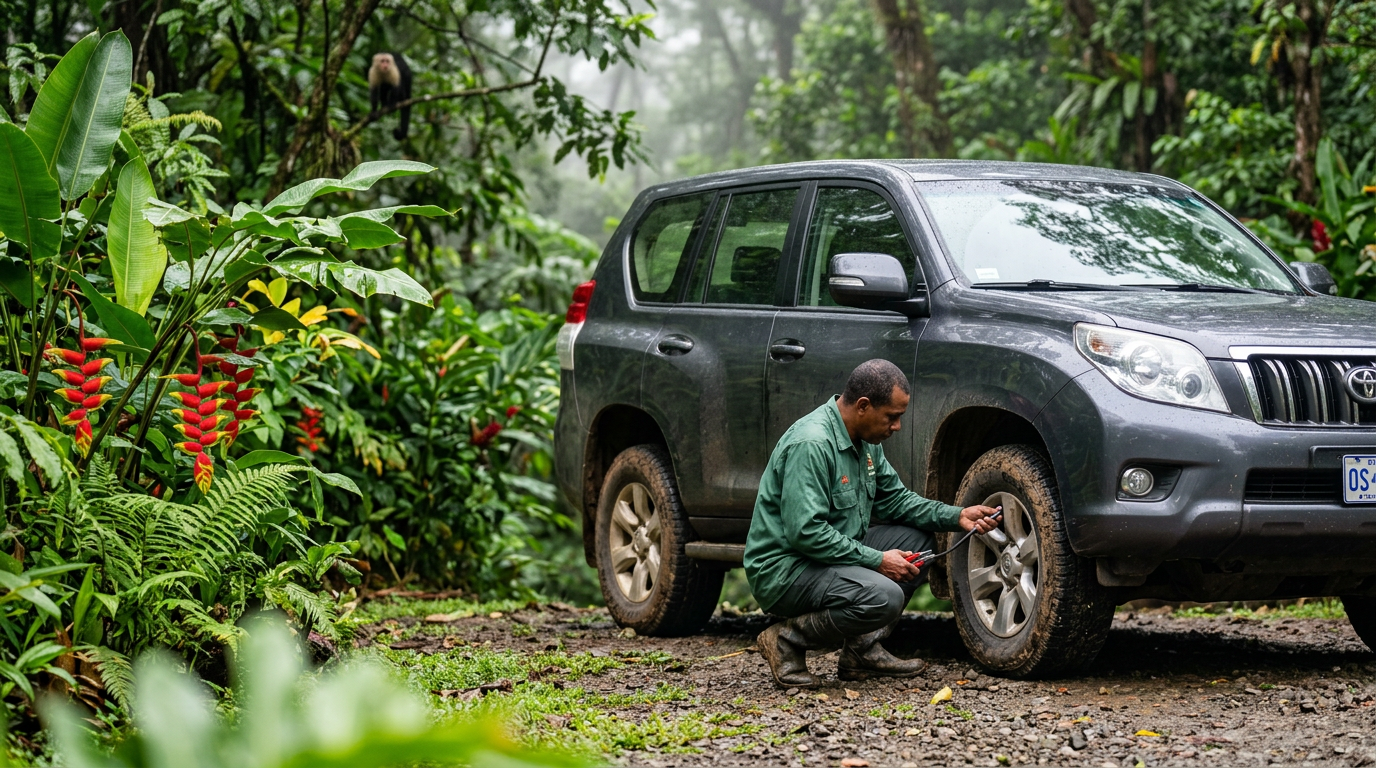
Yes, rental cars are generally safe in Costa Rica when you use normal travel caution and park smart. The main risk is not the car itself—it’s theft from vehicles left unattended with visible bags, camera gear, or phones at beaches, trailheads, and remote lots. Be careful, and most trips go smoothly.
So, are rental cars safe in Costa Rica?
Yes—rental cars are generally safe in Costa Rica for travelers who drive defensively and avoid leaving valuables in the vehicle. On our last visits to Guanacaste, Arenal, Monteverde, and the Central Valley, we saw plenty of visitors self-driving without problems.
The honest answer is that the bigger risk is property theft from parked cars, not violent crime aimed at tourists on the road. If you know where break-ins happen and how to park, renting a car remains one of the best ways to explore.
What’s the real risk: driving trouble or car break-ins?
Most visitors worry about mountain roads, rain, or getting lost. Those are manageable issues. The more common headache is someone spotting a backpack, purse, laptop, or camera bag in an unattended vehicle and breaking a window.
That happens more often in:
-
Beach parking areas with little supervision
-
Trailheads near waterfalls, national parks, and hiking areas
-
Unfenced lots near popular stops
-
Cars parked overnight on the street in tourist towns
In other words, the car is usually fine until it’s left in the wrong place with tempting items inside.
Where do rental car break-ins happen most often?
We’ve heard the same pattern from local operators, hotel owners, and travelers for years: thieves look for easy, quick targets. They are not trying to steal the car; they want what’s inside and they want it fast.
Beaches, hikes, and lonely pull-offs
If you’re visiting places like Manuel Antonio, Uvita, Cahuita, Monteverde, or the road to Río Celeste, assume that any unattended car is being watched. A crowded beach access road or a trail parking area can be riskier than a city street because nobody is paying close attention.
That doesn’t mean you should avoid these places. It means you should arrive prepared, lock up, and travel light. If you’re heading to the coast, read the route details for your base area too, such as Manuel Antonio or Tamarindo, because parking habits vary by town. For a full guide to the area, see Monteverde as well.
Overnight street parking
Overnight street parking is where people get sloppy. If your hotel offers secure on-site parking, use it. If you’re staying in a smaller lodge, ask whether the lot is gated, staffed, or at least in view of reception.
A car parked in front of a bright hotel with cameras and foot traffic is a very different situation from a dark curb a few blocks away.
How do you keep a rental car safe in Costa Rica?
The good news: the prevention playbook is simple, and it works.
The rules we actually follow
-
Never leave visible belongings in the car — not even a jacket on top of a bag.
-
Put bags in the trunk before you arrive at the beach or trailhead.
-
Keep the glove box empty or open if you’re carrying documents.
-
Park in guarded lots, hotel lots, or paid lots when possible.
-
Avoid isolated roadside pull-offs unless you can see other people and cars.
-
Don’t leave luggage in the vehicle while you go for lunch.
-
Use a steering wheel lock or alarm only as a bonus; visibility and location matter more.
Plan My Costa Rica’s car-rental recommendations are coming soon. Until then, book directly with a provider you trust and confirm the final price, insurance, and vehicle details before paying.
Smart packing for day trips
The lighter your day bag, the less vulnerable you are. We like a setup with:
-
One small daypack
-
Water bottle
-
Lightweight rain shell
-
Copy of passport, not the original
-
Phone charger in a pocket, not packed away
If you’re hiking, bring only what you’ll carry inside the park. That small habit keeps you from stuffing important gear into the car.
Local tip: At beaches and trailheads, act like someone is always nearby. If you must leave the car, finish packing at the hotel, hide everything before you arrive, and park where attendants or other travelers can see the vehicle.
Is it safe to drive rental cars at night?
Usually yes on main highways, but night driving takes more focus in Costa Rica. Roads can be narrow, shoulders disappear, lane markings fade in rain, and you’ll run into pedestrians, cyclists, and slow trucks.
We recommend avoiding late-night drives on unfamiliar rural roads whenever possible. A 2-hour drive can feel fine in daylight and far more tiring after dark, especially in the rain.
Roads that deserve extra caution
-
Curvy mountain routes around Monteverde
-
Secondary roads to beaches and surf towns
-
Gravel sections in the rainy season
-
Routes with limited lighting outside major towns
If your itinerary includes multiple regions, think in drive times rather than distance alone. For example, San José to La Fortuna is about 130 km / 81 miles and roughly 3 to 4.5 hours depending on traffic and weather. San José to Manuel Antonio is about 160 km / 99 miles and often 2.5 to 4 hours.
Do you need a 4x4 to stay safe?
Not always. A lot of travelers overbuy vehicle size because they’re worried about safety. In reality, the rental car model does not prevent break-ins. What it does affect is clearance, traction, and comfort on rough or rainy roads.
For paved coastal routes and major highways, a compact SUV is often enough. For steeper roads, gravel, or rainy-season trips to places like Monteverde or parts of the Nicoya Peninsula, many travelers prefer a small 4x4 for peace of mind.
When a small SUV makes sense
Choose one if you expect:
-
Gravel approaches to lodges or beaches
-
Steep inclines in rainy weather
-
A family with luggage
-
Multiple destinations in one trip
A 4x4 is a better road-safety choice, but your anti-theft habits still matter more once you park.
What about insurance, deposits, and rental company safety?
This is where commercial intent gets real. Rental safety is not just about driving behavior; it’s also about booking with clear coverage and fair terms.
Expect rates in August 2026 to start around $25–$45 per day for basic economy rentals and $45–$70+ per day for compact SUVs, with much higher totals once mandatory coverages and extras are added. Deposits vary widely, but credit card holds of $500–$2,000 are common.
What to check before you book
-
Whether mandatory liability is included or added later
-
The deductible on collision damage waiver
-
Tire, windshield, and undercarriage coverage
-
Airport fees versus downtown pickup
-
Deposit amount and card requirements
-
Roadside assistance availability
Plan My Costa Rica’s car-rental recommendations are coming soon. Until then, book directly with a provider you trust and confirm the final price, insurance, and vehicle details before paying.
Which places feel safer for parking and which need more caution?
Parking confidence depends on the town, the lot, and the time of day. In places with more tourism infrastructure, such as La Fortuna or central Manuel Antonio, you can often find organized parking and attendants. In smaller or more remote stops, you need to be more self-reliant.
A quick parking reality check
-
Safer: staffed hotel lots, paid beach lots, busy restaurant parking
-
Medium risk: daytime public lots with steady foot traffic
-
Higher risk: isolated trailheads, unfenced roadside shoulders, dark overnight street parking
Around destinations like La Fortuna, the parking scene is usually straightforward if you use reputable lodging and tour meeting points. On more remote road trips, it pays to ask the hotel about the lot before you arrive.
What should you do if your rental car is broken into?
First, don’t panic. Break-ins are frustrating, but most travelers get through the paperwork and keep going.
Do this right away
-
Move to a safe place and check that nobody was injured.
-
Call the rental company immediately.
-
File a police report; you’ll need it for insurance.
-
Photograph the damage and the parking area.
-
Cancel cards, replace documents, and contact your travel insurer if needed.
If passports or cards are gone, notify your embassy or bank as soon as possible. Keeping digital copies of key documents in cloud storage makes this much easier.
What not to do
-
Don’t leave the scene without reporting the incident.
-
Don’t toss the damaged items before documenting them.
-
Don’t assume your hotel can handle the rental paperwork for you.
So, should you rent a car in Costa Rica?
For most travelers, yes. A rental car gives you the freedom to hit early hikes, beach sunsets, coffee stops, and scenic detours without relying on schedules. The key is booking the right vehicle, parking in the right places, and never advertising your gear inside the cabin.
If you want the convenience of self-driving without guesswork, compare options early, pick a secure pickup plan, and keep your expectations realistic. Costa Rica rewards travelers who are prepared, not paranoid.
Let's build your Costa Rica trip.
Browse locally-vetted tours, or tell us what you're dreaming up and we'll help shape it.
Common questions
Are rental cars safe in Costa Rica for tourists?+
Yes, rental cars are generally safe for tourists in Costa Rica. The main issue is theft from parked vehicles, especially when valuables are visible at beaches, trailheads, and isolated lots.
Is it safe to leave luggage in a rental car in Costa Rica?+
No, not for long. We strongly recommend never leaving luggage visible in the car, even for a quick lunch stop. Use secure hotel storage instead.
Do rental cars get stolen in Costa Rica?+
It happens, but it’s less common than window break-ins and theft from the vehicle. Most travelers reduce risk by parking in secure lots and avoiding obvious roadside exposure.
Is a 4x4 safer than a regular rental car?+
A 4x4 can be safer for rough roads, steep driveways, and rainy-season travel, but it does not stop break-ins. Security depends more on where and how you park.
Are beach parking lots safe in Costa Rica?+
Some are fine during busy hours, but many beach lots are targeted because cars sit unattended. Never leave bags, electronics, or passports in the vehicle.
What is the safest way to park a rental car in Costa Rica?+
Use a staffed hotel lot, a paid lot, or a busy monitored area. Empty the cabin, hide everything before you arrive, and avoid isolated shoulders.
Should I rent a car or use shuttles in Costa Rica?+
If you want maximum flexibility and plan to visit multiple regions, renting often makes sense. If you dislike driving or plan only a few point-to-point transfers, shuttles may be simpler.