
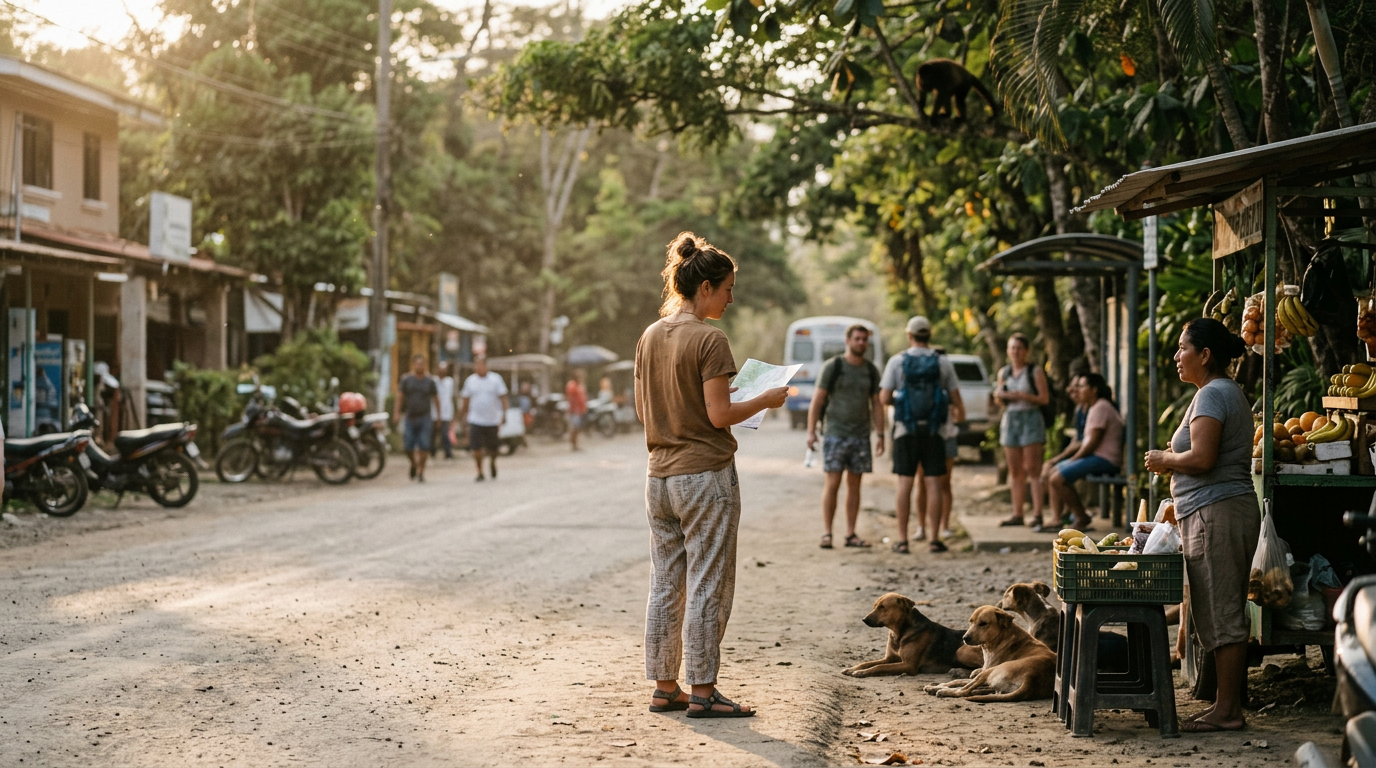
Yes—Costa Rica is generally safe for solo female travelers, especially if you stick to daylight transit, reputable hotels or hostels, and busy areas like La Fortuna, Monteverde, Manuel Antonio, or the Central Valley. The main risks are petty theft, night travel, and isolated beaches, not constant street danger.
The myth is that Costa Rica is either “completely safe” or “too dangerous to travel alone.” Neither is true. On our last visits across San José, La Fortuna, Monteverde, and the Pacific coast, we saw the same pattern every time: smart solo women moved around confidently, while careless timing and bad transport choices created most of the trouble.
So, is Costa Rica safe for solo female travelers?
Mostly yes. Costa Rica is one of the easiest countries in Central America for a solo trip, and that includes women traveling alone. You’ll still want the usual travel instincts—watch your bag, avoid empty streets late at night, and plan transport in advance—but you do not need to travel in fear.
The question is less “Is it safe?” and more “What kind of trip are you planning?” A solo woman staying in a well-reviewed hostel in La Fortuna and joining a morning waterfall tour has a very different risk profile than someone arriving in Jacó at 1 a.m. after a long bus ride.
For a destination-by-destination base, start with La Fortuna travel planning if you want easy tours, hot springs, and straightforward logistics, or Monteverde trip ideas if you prefer cooler mountain weather and a quieter vibe.
What travelers usually worry about
Most solo female travelers ask about the same four things:
-
Transport after dark
-
Street harassment
-
Beach safety and theft
-
Whether hostels feel secure
Those concerns are valid, but manageable. We’ve seen plenty of women travel Costa Rica alone with no incidents beyond a stolen flip-flop left outside a hostel door or a pushy taxi driver trying to charge too much.
Is Costa Rica safe at night?
Night travel is where Costa Rica gets less forgiving. Not because every road turns dangerous, but because visibility drops, transit gets patchy, and the odds of petty theft rise when you’re tired and carrying luggage.
If you are arriving after dark, keep it simple:
-
Use a pre-booked shuttle, licensed taxi, or app-based ride where available.
-
Avoid walking alone in dim neighborhoods with your phone out.
-
Get cash and SIM/WhatsApp logistics sorted before sunset.
In San José especially, we advise solo women to treat late-night arrivals as a planning problem, not a dare. A taxi from SJO airport to central San José usually runs about $30–$45 USD, depending on zone and traffic, and that’s often better than trying to piece together a random ride at midnight.
What about night buses?
We don’t recommend night buses for most solo female travelers unless you know the route, the station, and the luggage situation well. They can be useful for budget travelers, but they add stress you probably don’t need on a first solo trip.
Plan My Costa Rica’s car-rental recommendations are coming soon. Until then, book directly with a provider you trust and confirm the final price, insurance, and vehicle details before paying.
Local tip: If you land late, sleep near the airport or in a straightforward base like Alajuela or central San José, then move on in daylight. It’s boring advice, but boring is usually safer.
Are hostels safe for women traveling alone?
Yes, many are. In fact, hostels can be one of the safest and most social choices for solo women in Costa Rica—as long as you choose well. The difference between a good hostel and a sloppy one is huge.
Look for these signs:
-
Female dorms or female-only floors
-
Lockers that actually fit a daypack
-
Staff on-site late into the evening
-
Central locations, not isolated side roads
-
Recent reviews from solo women
In places like La Fortuna, Monteverde, Santa Teresa, and Puerto Viejo, the best hostels tend to be full of other travelers doing the same circuit of waterfalls, surf lessons, yoga classes, and rainforest hikes. That social layer helps. We’ve watched solo women arrive nervous and leave with dinner plans, sunrise hike buddies, and shuttle partners for the next town.
What you should not ignore is room security. Use a small cable lock if needed, keep passports and cards in a pouch you can lock, and don’t leave your phone charging unattended in shared spaces.
Hostel price ranges in July 2026
As of July 2026, expect roughly:
-
$18–$35 USD for a dorm bed in mid-range hostel towns
-
$55–$95 USD for a basic private room
-
$90+ USD for a stronger private room in peak season or beach towns
The cheapest option is not always the safest or the best place to meet other travelers. We usually tell solo women to spend a bit more for a central, well-reviewed property.
Is it safe to go to Costa Rica beaches alone?
Sometimes yes, sometimes no. Beaches are where people get relaxed, and that’s when theft and bad judgment sneak in. A quiet beach at sunset can be lovely, but it is not where you want to be alone with valuables, especially if access roads are empty.
The safest beach strategy is simple:
-
Go during the day
-
Swim near other people and lifeguards when available
-
Leave valuables locked up
-
Don’t set up far from the main stretch unless you know the area well
In tourist-heavy zones like Manuel Antonio, Tamarindo, and parts of Nosara, you’ll usually find enough activity to feel comfortable in daylight. In more remote spots, the issue is less “crime hotspot” and more isolation plus poor cell service plus no one around to help if something goes wrong.
If you’re building a beach-focused trip, Manuel Antonio is one of the easiest first-timer bases because it combines park access, lodging, and established visitor flow. For surf towns, the vibe shifts fast after sunset, so choose a place with a walkable center or a reliable shuttle back to your stay.
A quick beach safety checklist
Before you head out, make sure you have:
-
One phone battery backup or power bank
-
A dry bag or crossbody pouch
-
Minimal cash and one card
-
Flip-flops you won’t mind losing
-
A planned ride back before dark
On our last coastal run, the women traveling alone who had the smoothest beach days were the ones who treated the beach like a day hike: light gear, clear exit plan, and no “let’s see what happens” attitude.
Can solo women use Uber in Costa Rica?
Yes, but with limits. Uber is usable in parts of Costa Rica, especially in the Greater San José area and some tourist zones, but coverage is not universal. In some beach towns, you may find very few drivers or long wait times, and in certain places it simply isn’t the right tool.
For solo female travelers, Uber can feel more comfortable than hailing a random street taxi, mainly because the ride is tracked in-app. That said, you still need to stay alert:
-
Confirm the plate and driver name before getting in
-
Sit in the back seat
-
Share your trip status if you can
-
Avoid getting in if the match details do not line up
For airport runs and inter-town travel, pre-booked shuttles remain the easiest option for many women. They cost more, but they remove a lot of friction. Budget roughly $50–$90 USD for shared shuttles on common tourist routes, and more for private transfers.
When Uber is useful — and when it isn’t
Uber is useful when:
-
You are in San José, Escazú, Alajuela, or Heredia
-
You need a short trip in a known area
-
You are leaving dinner or a bar early enough
Uber is less useful when:
-
You are in remote beach towns
-
You need a guaranteed ride at a set time
-
You are traveling between regions with luggage
Think of Uber as a city tool, not your entire transportation plan.
What should I wear in Costa Rica as a woman?
Costa Rica is casual. You do not need to dress conservatively in a strict sense, but you will be more comfortable if you dress like someone who wants to move, sweat, hike, and jump on a shuttle without fuss.
The practical dress code is simple:
-
Tops: T-shirts, tank tops, athletic tops, light button-downs
-
Bottoms: Shorts, skirts, leggings, hiking pants, sundresses
-
Footwear: Sneakers, sandals with grip, water shoes for beaches or rivers
-
At night: A slightly nicer top and clean sandals is enough for most places
In San José or upscale hotel zones, people do dress a touch more polished at dinner. On the coast, nobody cares much unless you show up to town in a bikini cover-up and expect to blend in at a café. Even then, it is more about practicality than judgment.
What not to overpack
You can leave these behind unless you have a specific plan:
-
High heels
-
Heavy jeans
-
Bulky handbags
-
Expensive jewelry
-
Thick jackets for most lowland areas
If you’re heading to Monteverde, bring a light rain shell and one warm layer. Elevation changes fast, and evenings can feel cool enough for a fleece.
Which places feel easiest for a solo female trip?
Some destinations are simply smoother for first-time solo women because the infrastructure is easy and travelers are everywhere. That doesn’t mean you should avoid the rest of the country; it just means you can stack the odds in your favor.
The easiest bases we’ve seen repeatedly are:
-
La Fortuna for hot springs, tours, and simple logistics
-
Monteverde for a quieter mountain feel and organized activities
-
Manuel Antonio for beach + park combination and lots of visitors
-
Santa Teresa if you are comfortable with a surf-town rhythm and higher prices
-
Tamarindo for a social beach base with lots of other travelers
If you want more activity-based planning, the adventure tours collection is a good place to start when you’re deciding whether to build around waterfalls, rafting, ziplining, or mixed outdoor days.
Places that need more caution, not avoidance
There are areas where you just need tighter judgment:
-
Big-city areas after dark
-
Remote beaches with no services
-
Long transit days with multiple connections
-
Less-trafficked neighborhoods far from a central tourist zone
That does not mean “don’t go.” It means stay where people are, keep your movements predictable, and don’t advertise your schedule to the whole world.
How do solo women stay safe without feeling paranoid?
The trick is to build habits that feel routine, not fearful. The women who travel best here usually aren’t the ones with the most gear or the most dramatic precautions. They’re the ones who make smart choices automatically.
A simple solo safety routine
-
Book the first night before arrival
-
Share your lodging and transport details with someone back home
-
Keep one card separate from your wallet
-
Use daytime for long transfers whenever possible
-
Ask your hostel or hotel which areas are best avoided after dark
The biggest confidence boost is often local advice. Front desks, shuttle drivers, and tour operators usually know where it feels sketchy that week and where the best food is after 7 p.m. Use that knowledge.
On a practical level, Costa Rica rewards women who move like locals do: not rushed, not flashy, and not carrying everything they own in one tote bag.
Final verdict: should you do it?
Yes. If you’ve been hesitating because you’re wondering whether Costa Rica is safe for solo female travelers, the honest answer is that it’s a very doable solo trip with a few non-negotiables: daylight travel, sensible lodging, careful beach timing, and smart nighttime choices.
We’ve seen enough solo women travel here comfortably to say this with confidence. Costa Rica is not risk-free, but it is very manageable—and often a fantastic first solo destination if you want waterfalls, rainforests, surf, and a country that is used to visitors moving independently.
If you plan it well, you should feel more excited than nervous by the time your flight lands.
Let's build your Costa Rica trip.
Browse locally-vetted tours, or tell us what you're dreaming up and we'll help shape it.
Common questions
Is Costa Rica safe for solo female travelers at night?+
It can be, but nighttime is when you should be most careful. Use licensed taxis, Uber where available, or pre-booked shuttles, and avoid walking alone in quiet areas after dark.
Is Uber safe for women in Costa Rica?+
Uber is generally fine in places where it operates, especially for short city rides. Still confirm the plate and driver, sit in the back, and avoid relying on it in remote beach towns.
Are hostels safe for solo female travelers in Costa Rica?+
Yes, many are. Choose hostels with strong recent reviews, lockers, female dorms or floors, and a central location. Private rooms are worth the upgrade if you want more comfort.
What areas are best for solo female travelers in Costa Rica?+
La Fortuna, Monteverde, Manuel Antonio, Tamarindo, and parts of Santa Teresa are popular because they’re tourist-friendly, active, and easy to navigate.
Is it safe to go to the beach alone in Costa Rica?+
In daylight and busy areas, yes. Avoid isolated beaches, keep valuables minimal, and don’t stay until after dark unless you have a reliable ride and know the area well.
What should a woman wear in Costa Rica?+
Casual, practical clothes are best: light tops, shorts, sundresses, athletic wear, and comfortable shoes. You don’t need to dress conservatively, just sensibly for heat, rain, and walking.
Should solo female travelers rent a car in Costa Rica?+
A rental car can help if you’re confident driving and want flexibility, but it also adds cost and road stress. For many first-timers, shuttles and tours are easier and safer.