
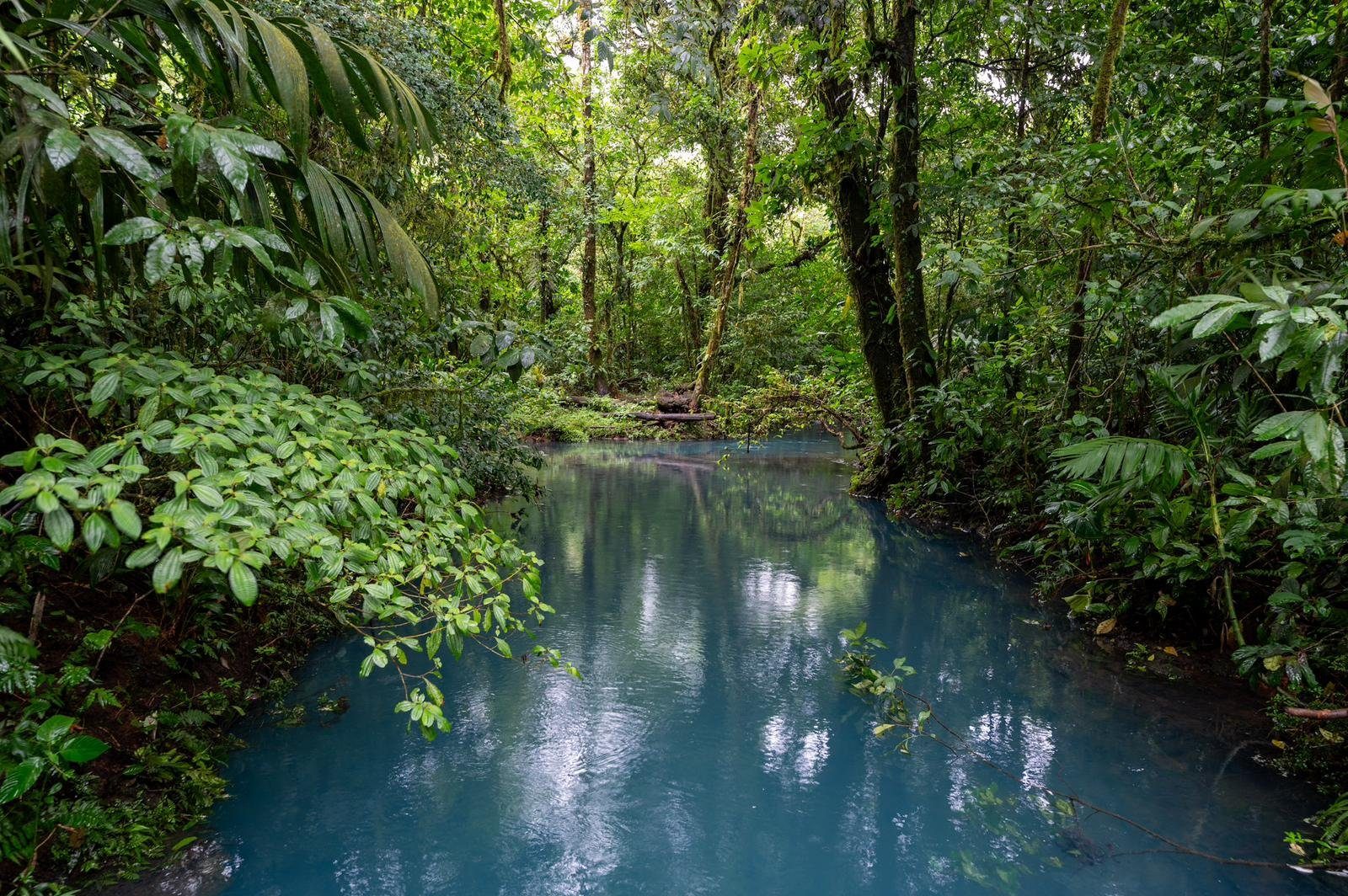
Yes — the rio celeste hike is very doable as a day trip from La Fortuna if you leave early and are prepared for mud, rain, and stairs. In Tenorio Volcano National Park, the main trail to the rio celeste waterfall and the Teñidero is short enough for most travelers, but the footing gets slick fast, especially in wet season.
If you’re planning the rio celeste hike from La Fortuna, this guide is for travelers who want the logistics, not the hype. It’s for you if you want to know trail length, stairs, timing, and what the weather actually does to the hike. It is not for anyone looking for a lazy roadside stop or a beach-day style outing.
Rio Celeste works best when you treat it like a proper half-day or full-day nature outing in Tenorio Volcano National Park. The hike is manageable, but the drive from La Fortuna is long enough that timing matters more than people expect. On our last visit in October 2026, the travelers who started early had the best experience by far.
Is Rio Celeste a good day trip from La Fortuna?
Yes, and it’s one of the most practical nature day trips from La Fortuna if you’re already based in the Arenal area. The drive is usually about 1.5 to 2 hours each way, depending on your hotel location and road conditions. That means you should plan for a 9 to 10 hour total day if you include the hike, park entry, lunch, and buffer time.
The road is not difficult in a 4x2 during dry stretches, but heavy rain changes the picture fast. If you’re visiting in the wetter months, the final approach can get bumpy and slow, and the parking areas fill earlier than most people expect. A guided Rio Celeste tour is often the cleanest option if you don’t want to manage navigation, entry timing, and meal stops yourself.
From a budget angle, a self-drive day usually breaks down like this:
-
Gas from La Fortuna: roughly $15–$25 round trip
-
Park entrance: usually $10–$15 per adult range, depending on current policy
-
Lunch near the park: about $10–$18 per person
-
Snacks, water, and parking extras: $5–$15
If you’d rather keep it simple, we recommend comparing a self-drive day to a guided day before you commit. Our bookable Rio Celeste & Tenorio Volcano National Park tour is a straightforward way to do it in one day, and it’s one of the easiest logistics wins for La Fortuna travelers.
What exactly do you hike at Rio Celeste?
The main route in Tenorio Volcano National Park is a loop-style nature trail with the key sights packed into one hike. Most visitors come for three things: the rio celeste waterfall, the Teñidero, and the blue river sections that make the whole place famous.
The round-trip hike is commonly around 6 km / 3.7 miles, though the exact feel depends on how fast you stop for photos and how muddy the trail is. Most travelers finish in 2.5 to 3.5 hours on the trail itself, and longer if they move slowly or travel with kids.
The key stops on the trail
-
The Teñidero — where two clear rivers meet and turn a milky blue.
-
The rio celeste waterfall — the signature fall, reached by a stair descent and ascent.
-
The river viewpoint areas — where you see the famous blue water effect.
-
The lagoon and secondary trail sections — scenic, but less dramatic than the waterfall and Teñidero.
The hike is not a hard mountain trek, but it is also not flat and easy the whole way. The stairs to the waterfall are the single most physically annoying part, especially if they’re wet. If you have knee issues, pace yourself and take the railings seriously.
Why is Rio Celeste blue?
The short answer is chemistry and light, not magic. At the rio celeste teñidero, volcanic minerals from the two rivers react in a way that changes how light scatters, creating that bright blue color. It looks almost unreal on sunny days, but it’s a natural phenomenon, not dyed water.
The color can change with weather and flow. After heavy rain, the water often looks more turquoise-gray than postcard blue because sediment and runoff increase. That doesn’t mean the trip is ruined, but it does mean you should lower your expectations if it’s been pouring all morning.
Here’s the part travelers usually miss:
-
More rain can reduce the blue intensity
-
Clearer weather often improves visibility
-
The Teñidero is the best place to understand the color change
-
The waterfall pool can look more vivid than the river itself on a good day
If you’re building your trip around the color alone, go early and give yourself the best chance of sunshine. If you’re building it around scenery, wildlife, and a good walk, the site still delivers even when the water isn’t neon blue.
How hard is the trail, really?
For most healthy travelers, the rio celeste hike is moderate, not strenuous. The terrain is the real issue, not the distance. Mud, roots, and slick inclines make this feel harder than the mileage suggests.
The trail conditions usually break down like this:
-
Dry season: easier footing, faster pace, still dusty in spots
-
Green season: more mud, more standing water, slower progress
-
After heavy rain: slippery sections, extra caution on stairs and descents
What makes people overestimate the difficulty is the combination of short climbs and wet surfaces. You may not be gaining huge elevation, but you’re doing constant footing corrections. That’s why we tell travelers to wear shoes they’d be fine ruining, not fashion sneakers.
What to wear
-
Trail shoes or lightweight hiking shoes with grip
-
Quick-dry socks
-
A light rain jacket or poncho
-
A small daypack with water and a dry bag for electronics
-
Long shorts or leggings if you hate mud splatter
Avoid white shoes. Seriously. We’ve watched people leave the park with shoes the color of chocolate pudding.
What’s the waterfall stairs situation?
This is the part most first-timers ask about because the rio celeste waterfall is the biggest physical obstacle on the route. To reach the viewing area, you descend a fairly steep staircase, then climb it back out. The stairs can be wet, narrow, and busy at peak times.
The good news is that the steps are short enough that almost everyone can handle them with a slow pace. The bad news is that the climb back up can feel brutal if you’re hot, carrying extra camera gear, or traveling with young kids. Plan a pause at the bottom and don’t rush the return.
A few practical notes:
-
Hold the rail on the way down and up
-
Keep your hands free if possible
-
Wait for people descending before stepping onto narrow sections
-
If it has been raining, expect the steps to be slick
If knee strength is a concern, the waterfall section is the reason to choose a guided day with built-in pacing rather than trying to race through on your own. A well-timed Rio Celeste & Tenorio Volcano National Park tour can save you a lot of stress, especially if you want the park highlights without babysitting the schedule.
Local tip: On rainy mornings, we’ve had the best luck starting early, hiking the Teñidero first, and saving the waterfall for later in the loop. If the weather briefly clears, you may catch the bluest water before the crowds arrive.
When should you start, and how early is early?
For a La Fortuna day trip, 8:00 AM or earlier is the sweet spot. Earlier is even better if you’re visiting during peak travel months, because parking, trail congestion, and afternoon rain all get worse as the day goes on. This is one of those hikes where an early departure improves almost every part of the experience.
Here’s a realistic timing plan from La Fortuna:
-
Leave La Fortuna around 6:00–6:30 AM.
-
Arrive near the park around 7:30–8:00 AM.
-
Start hiking shortly after opening.
-
Finish the trail before lunch.
-
Eat on the way back or in La Fortuna.
If you leave late, you’re more likely to hit fuller parking, more people on the waterfall stairs, and thicker afternoon rain. That doesn’t make the hike impossible, but it does make the day feel longer and less efficient.
Should you do it self-drive or book a rio celeste tour?
Both work. The right choice depends on how much you want to think about logistics. If you like freedom, self-drive is fine. If you want the simplest one-day plan, a guided rio celeste tour from La Fortuna is usually worth the extra cost.
Self-drive makes sense if:
-
You’re confident on rural roads
-
You want to control your schedule
-
You prefer paying only for gas, park entry, and food
A guided tour makes sense if:
-
You want to avoid parking and timing stress
-
You prefer a local driver who knows the route
-
You’re traveling with kids, older parents, or limited mobility
-
You want one clean day without Google Maps drama
For travelers comparing activities, it also helps to think about what else you want to bundle with your La Fortuna days. If Rio Celeste is one stop among several, browse our La Fortuna tours guide and keep the longer drive reserved for a day when you can start very early.
How much time should you budget in the park?
Plan on 3 to 4 hours inside the park if you want the hike done comfortably, photos included. Add driving time, breakfast, lunch, and any roadside stops, and the day becomes a full commitment rather than a quick outing.
A good time budget looks like this:
-
Drive from La Fortuna: 1.5–2 hours each way
-
Park entry and check-in: 20–40 minutes
-
Hike itself: 2.5–3.5 hours
-
Lunch stop: 45–75 minutes
-
Buffer for rain or traffic: 30–45 minutes
If you want a more relaxed pace, add more. The park is not a place where trying to squeeze the whole experience into a half day feels smart. On wet days especially, rushing increases the chance of a slip and makes the stairs more tiring than they need to be.
What should you pack for mud, rain, and a long day?
Pack for wet footing even if the forecast looks decent. In this part of Costa Rica, “chance of showers” often turns into “we were glad we had rain gear.”
Packing list
-
Water: at least 1 liter per person
-
Small snack or energy bar
-
Rain jacket or poncho
-
Grippy shoes, not flat sneakers
-
Bug spray
-
Cash for park-side extras and lunch
-
Phone waterproofing or dry pouch
-
Microfiber towel or spare shirt for the ride back
The biggest mistake is assuming you’ll stay dry enough to wear whatever you wore in town. You won’t. Between humidity, mud, and the waterfall stairs, people usually come out damp even without a rainstorm.
If you’re pairing Rio Celeste with other La Fortuna activities, the same packing logic applies to waterfall and volcano days. That’s one reason our waterfalls category and volcano category can be useful if you want to compare similar full-day outings before booking.
What’s the best way to plan the day from La Fortuna?
Keep the day simple. The best Rio Celeste days are the ones with an early departure, a clear weather window, and lunch planned after the hike rather than before it. That keeps the whole trip moving and reduces the chance of feeling rushed inside the park.
A clean sample day looks like this:
-
6:00 AM: leave La Fortuna
-
7:45 AM: arrive near Tenorio Volcano National Park
-
8:00–11:30 AM: hike the loop, waterfall, and Teñidero
-
12:00–1:00 PM: lunch nearby
-
2:30–4:30 PM: return to La Fortuna, with weather buffer
If you want the day handled for you, that’s exactly the type of outing our bookable Rio Celeste & Tenorio Volcano National Park tour is built for. It keeps the logistics tidy, which matters more here than on many other day trips in Costa Rica.
At the end of the day, the Rio Celeste hike is less about technical difficulty and more about timing, footing, and weather discipline. Start early, expect mud, respect the stairs, and go in knowing the blue water is brightest when nature cooperates. That’s the formula that makes this trip feel smooth instead of chaotic.
Let's build your Costa Rica trip.
Browse locally-vetted tours, or tell us what you're dreaming up and we'll help shape it.
Common questions
How long is the Rio Celeste hike?+
Most travelers do about 6 km / 3.7 miles round trip inside Tenorio Volcano National Park. Expect 2.5 to 3.5 hours on the trail, longer if it’s muddy or crowded.
Can you do Rio Celeste as a day trip from La Fortuna?+
Yes. The drive is usually about 1.5 to 2 hours each way, so it works best as a full-day outing with an early start from La Fortuna.
Is the Rio Celeste waterfall hard to reach?+
The waterfall itself is not technically difficult, but the stairs are steep and often slippery. Most visitors can handle them slowly, though they can be tiring on the way back up.
Why is Rio Celeste blue?+
The blue color comes from how light scatters when mineral-rich waters meet at the Teñidero. It is a natural effect, not dye or chemicals.
What should I wear for the Rio Celeste hike?+
Wear grippy shoes, quick-dry clothing, and a rain jacket or poncho. Mud is common, so avoid white sneakers or anything you would hate to get dirty.
Is Rio Celeste still worth visiting in the rainy season?+
Yes, if you’re fine with mud and a possible change in water color. Rain can make the blue less vivid, but the hike and waterfall are still worthwhile.
Do I need a guide for Rio Celeste?+
No, a guide is not required. But a guided rio celeste tour can make the day easier if you want help with timing, transport, and park logistics.