
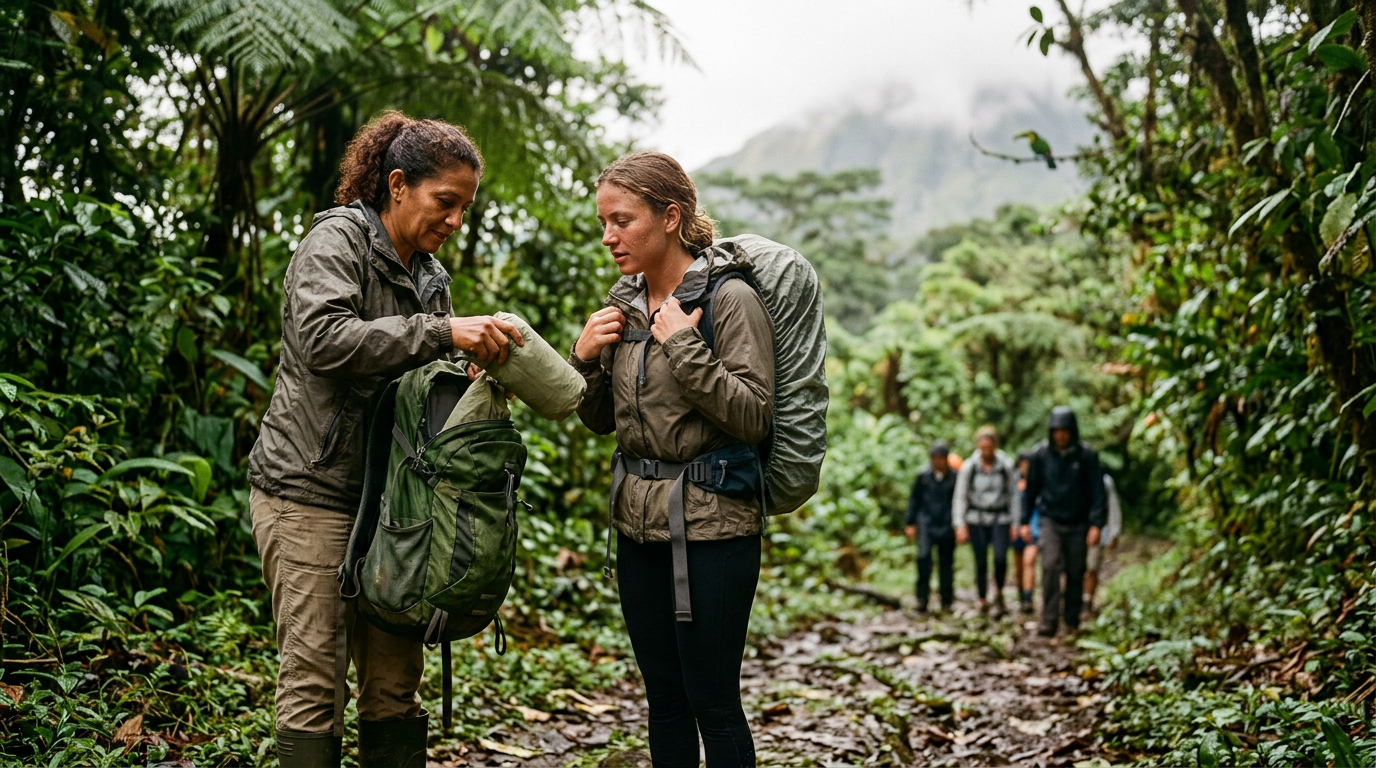
For Costa Rica rainy season, pack light, quick-dry clothes, a real rain jacket, waterproof shoes or sandals, and a small dry bag for electronics. You do not need heavy winter gear. Think hot, humid, and suddenly wet — that’s the real packing rule from May through November.
What should you actually pack for Costa Rica rainy season?
The biggest mistake we see is people packing for cold rain. Costa Rica’s rainy season is usually warm rain, sticky humidity, and afternoon downpours, not a chilly European autumn.
If you only remember one thing, remember this: pack for fast-drying comfort. You want clothes that survive sweat, rain, mud, and a quick turn around for dinner.
What clothes work best in the wet season?
Do I need sweaters or long pants?
Usually, no. In most lowland destinations — think Manuel Antonio, Tamarindo, Uvita, Tortuguero, and the Caribbean coast — daytime temperatures often sit around 26–32°C / 79–90°F even in rainy months.
What you do need is a light layer for air conditioning, elevation, or an early-morning boat ride. A thin hoodie, light pullover, or long-sleeve sun shirt is enough for most travelers.
Best clothing to pack
-
4–6 T-shirts or moisture-wicking tops
-
2–3 quick-dry shorts
-
1–2 pairs of lightweight long pants
-
1 light sweater or hoodie
-
1 set of sleepwear that dries fast
-
1 swimsuit, or 2 if you’ll rotate beach days
-
Underwear and socks that dry overnight
-
A compact umbrella if you like one, though a jacket usually works better in wind
Skip heavy jeans unless you really love suffering. They soak up water, take forever to dry, and become dead weight in humid weather.
What shoes should you bring?
Shoes make or break a rainy season trip. We’ve watched too many visitors ruin a day in La Fortuna or Monteverde because they showed up with slick fashion sneakers.
For most travelers, the sweet spot is one closed-toe pair and one waterproof sandal. That covers city wandering, muddy trails, river crossings, and beach towns.
Best footwear choices
-
Trail runners or lightweight hiking shoes with good grip
-
Waterproof sandals such as Teva-style or sturdy sport sandals
-
Flip-flops for the pool or very short walks only
-
Optional: gaiters if you’re doing serious hiking in muddy areas
If your itinerary includes La Fortuna, Arenal Volcano area, or Monteverde, good traction matters more than looking cute. Rain makes trails slick, and roots turn into little ankle traps.
If you’re still building the rest of your trip, check the destination pages for La Fortuna travel planning and Monteverde trip ideas; both areas are very different once the rains start.
What rain gear is worth carrying, and what is junk?
A lot of travelers bring cheap ponchos and regret it. Those plastic sheets tear, trap sweat, and flap around like flags in the wind.
A light waterproof rain jacket with a hood is the best value item on this list. If you are moving between car, restaurant, and trail, it beats an umbrella almost every time.
Good rain gear
-
Packable rain jacket with hood
-
Small umbrella for city use
-
Backpack rain cover
-
Zip-top pouches or dry bags for documents and electronics
-
Microfiber towel for wet seats, shoes, and gear
Gear I’d skip
-
Heavy ski jackets
-
Bulky boots for beach towns
-
One-time-use ponchos as your main plan
-
Cotton hoodies that stay damp all day
Local tip: In rainy season, I keep a microfiber towel and an extra shirt in the car even for short drives. If you get soaked between stops, that little bit of comfort changes the whole day.
What should you pack for electronics, documents, and valuables?
Rainy season packing is really about protecting the stuff you can’t easily replace. A phone, passport, charging cable, and debit card are far more important than a third pair of nice shorts.
Costa Rica travel is easy when your essentials stay dry. It gets annoying fast when your passport bag leaks during a downpour at a river ferry or trailhead.
Must-pack protection items
-
Waterproof phone pouch or sealed zip bag
-
Small dry bag for boat trips and waterfalls
-
Passport holder or document pouch
-
Power bank
-
Charging cables in a separate zip pouch
-
Waterproof case for camera gear if you bring it
If you’re doing adventure activities, especially rafting or waterfall visits, waterproof storage is not optional. For guided outings, browse rainforest and waterfall tours or rafting tours if that’s on your route.
What should families pack for Costa Rica’s rainy months?
Families usually need more backup clothing than couples do. Kids fall in puddles, sit on wet benches, and somehow get dirty five minutes after breakfast.
The trick is to plan for one outfit change per day, per child, if you’ll be outdoors. That sounds excessive until you spend an afternoon in a soggy park in June.
Family packing extras
-
Extra shirts and underwear for kids
-
Packable rain jackets in child sizes
-
Closed-toe shoes with grip
-
Snacks that don’t melt easily
-
Small towels for wet seats and car trips
-
Plastic bags for muddy clothes and shoes
If you’re traveling with younger kids, the wet season can still be great. Just don’t book a day with too many moving parts. One wildlife stop, one lunch, one lodge is usually smarter than five attractions.
What about beaches, hot springs, and volcano areas?
Rainy season does not mean “don’t go to the beach.” It means go with realistic expectations. On the Pacific coast, mornings are often dry and afternoons are when the sky opens up.
For beach towns like Tamarindo, Nosara, Santa Teresa, and Uvita, pack swimwear, sun protection, and something dry for after the rain. If you’re heading toward the hot springs in La Fortuna, wear sandals you don’t mind getting wet and a change of clothes for the ride back.
Best extras by activity
-
Beach towns: rash guard, hat, reef-safe sunscreen, dry bag
-
Hot springs: water shoes or sandals, swimsuit, towel bag
-
Volcano hikes: grippy shoes, light rain shell, socks that dry quickly
-
Boat trips: zip pouch for phone, sunglasses strap, light long-sleeve shirt
Rain can actually improve some trips. The forests look richer, rivers are fuller, and waterfalls hit harder. That’s why so many travelers still book the Costa Rica hot springs tours and waterfalls experiences in rainy months.
What should you pack for a Costa Rica road trip in rainy season?
Plan My Costa Rica’s car-rental recommendations are coming soon. Until then, book directly with a provider you trust and confirm the final price, insurance, and vehicle details before paying.
I’d keep the car stocked with the basics because rainy season traffic and weather can mess with plans.
Road-trip extras that pay off
-
Small towel for wet seats and muddy shoes
-
Change of clothes in a daypack
-
Extra phone charger and car charger
-
Printed reservation details or offline screenshots
-
Snorkel mask, binoculars, or other gear in dry bags
-
Reusable water bottle
Drive times also stretch when rain hits. A route that looks like 2.5 hours on Google can become 3.5 hours once there’s fog, slower traffic, or a flooded shoulder.
What should you not bring to Costa Rica rainy season?
This is where people overpack. You do not need to prepare for a mountain expedition if you’re staying mostly in the lowlands and beach towns.
The goal is mobility. The less you carry, the easier it is to move between humid coast, wet forest, and a cold air-conditioned hotel room.
Usually unnecessary items
-
Heavy jackets
-
Bulky boots for every day
-
Too many jeans
-
Full-size umbrellas if you hate carrying them
-
Multiple formal outfits unless you have special plans
-
Thick cotton hoodies that never dry
A lot of travelers also bring too many electronics. If you’re trying to photograph wildlife, a phone plus a compact zoom camera is often enough. Carrying a giant camera bag through a muddy trail is a fast way to hate your life.
How much should your luggage weight and setup matter?
More than you think. Wet season travel is easier with a carry-on-sized suitcase or a soft duffel that can handle getting a little damp.
We’ve watched travelers drag giant hard cases across gravel, mud, and resort parking lots. That works fine in San José. It gets old fast in remote lodges or beach towns with uneven paths.
Smart luggage setup
-
One main bag you can lift comfortably
-
One small daypack
-
One waterproof pouch inside your daypack
-
One separate bag for dirty or wet clothes
-
One pair of shoes you’re not worried about ruining
If you’re bouncing between regions, smaller luggage just makes life easier. That is especially true if your itinerary includes the Central Valley, Arenal, Monteverde, and the coast in one trip.
The simple packing checklist I’d use in August 2026
If you want the no-drama version, here it is. This is the list I’d hand to a friend landing here tomorrow.
Core rainy season packing list
-
4–6 quick-dry shirts
-
2–3 shorts
-
1–2 lightweight pants
-
1 rain jacket with hood
-
1 light sweater
-
1 pair of trail shoes or grippy sneakers
-
1 pair of waterproof sandals
-
Swimwear
-
Hat and sunglasses
-
Sunscreen and insect repellent
-
Dry bag or waterproof pouch
-
Power bank and chargers
-
Passport holder and a backup card
-
Microfiber towel
-
Small umbrella if you want one
Nice-to-have extras
-
Gaiters for muddy hikes
-
Water shoes for river or waterfall days
-
Dry sack for boat excursions
-
Extra socks
-
Laundry detergent sheet or travel wash
Rainy season in Costa Rica is not hard if you pack like someone who expects both sunshine and a 20-minute downpour. That’s the whole trick.
Pack light, dry fast, and protect the essentials. Do that, and the so-called “bad season” usually turns into one of the nicest times to be here.
How to pack without overthinking it
Most travelers waste space on the wrong things. They bring heavy layers, multiple nice outfits, and shoes that look good in photos but fail on a muddy trail.
What you want is a small, adaptable setup that works from the beach to the rainforest. Keep clothes simple, keep electronics dry, and leave room for the stuff you’ll buy here.
If your trip is focused on nature and activity, you can also build around the kind of days you’ve actually planned: wildlife walks, waterfalls, rafting, hot springs, and a few long drives. That is how rainy season trips go smoothly in real life.
If you’re still planning the route, start with the destination that matters most and pack around that. A week in Monteverde is not the same as a week in Tamarindo, and pretending otherwise is how people overpack.
Let's build your Costa Rica trip.
Browse locally-vetted tours, or tell us what you're dreaming up and we'll help shape it.
Common questions
What is the rainy season in Costa Rica?+
Rainy season usually runs from May through November, with the heaviest rain often in September and October on the Pacific side. The Caribbean coast has its own pattern and can stay wetter year-round, with some drier stretches in September and October.
Do I need a raincoat in Costa Rica?+
Yes, a lightweight rain jacket with a hood is one of the best things you can bring. It’s more useful than a cheap poncho because it handles wind, moving around town, and trail walks better.
Should I pack boots for Costa Rica rainy season?+
Usually not. Most travelers do better with grippy trail shoes or waterproof sneakers plus waterproof sandals. Heavy boots are overkill unless you’re doing a specialized hike in very muddy terrain.
Can I wear sneakers in Costa Rica during rainy season?+
Yes, but choose sneakers with good traction and quick-dry materials if possible. Regular fashion sneakers get soaked, smell bad fast, and can be slippery on trails and wet sidewalks.
What kind of clothes dry fastest in Costa Rica?+
Synthetic or moisture-wicking fabrics dry much faster than cotton. Lightweight long sleeves, athletic shirts, and travel pants are usually the most practical choices for rainy months.
Is an umbrella enough for Costa Rica rainy season?+
Not really. An umbrella is fine for short city walks, but a rain jacket is better for beaches, trails, and windy afternoons. Most travelers who rely only on umbrellas end up frustrated.
Do I need waterproof luggage or a dry bag?+
You don’t need fully waterproof luggage, but a dry bag or waterproof pouch is smart for phones, passports, chargers, and anything expensive. It’s especially useful for boat trips, waterfalls, and rafting.