
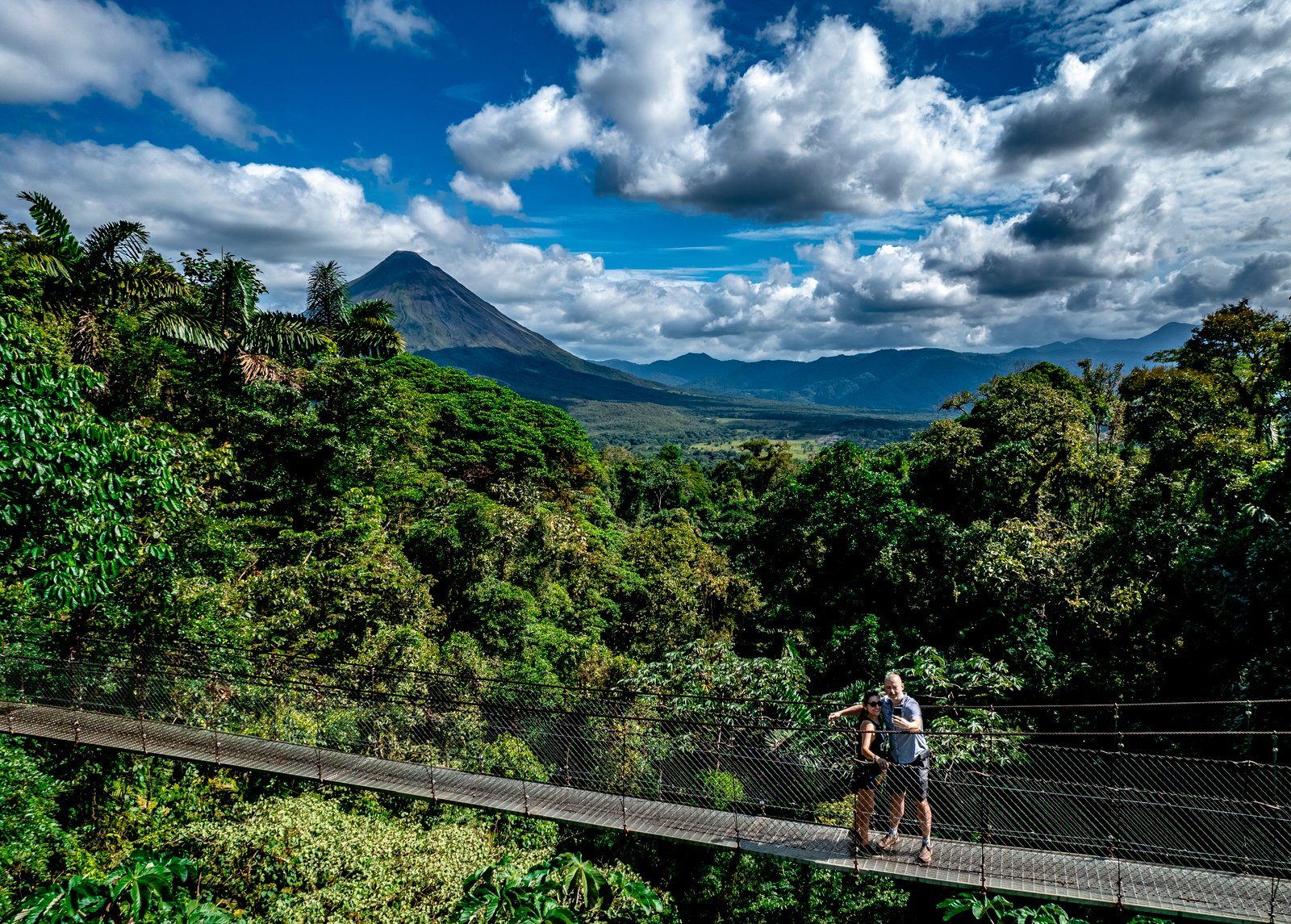
Is driving in Costa Rica difficult? For many travelers, it’s manageable rather than hard—but only if you accept slower speeds, occasional potholes, heavy rain, and routes that can get confusing outside the main highways. On good roads, it’s straightforward; in rural or mountain areas, it can feel demanding.
The short answer: difficult, or just different?
By November 2026 standards, driving in Costa Rica is usually manageable for confident drivers, not a white-knuckle ordeal. The country has paved highways, familiar road signs in most places, and plenty of travelers who self-drive every year.
What surprises people is the texture of the drive: sudden rain, narrow bridges, missing lane markings, steep hills, dogs in the road, and a Waze pin that may be more honest than Google Maps. On our last visit between San José and La Fortuna, the road itself was fine; the challenge was staying patient when the estimated arrival time kept stretching.
Choose driving if you want freedom and flexible timing
Driving makes sense if your trip includes multiple hotel stops, early departures, grocery runs, or remote lodges. It’s also the best option if you hate waiting for transfers or want to stop for a sodita, viewpoint, or fruit stand whenever you feel like it.
In practical terms, self-driving is a strong fit for:
-
Families hauling beach gear, snacks, and car seats
-
Couples doing a loop trip with 2–4 bases
-
Travelers staying outside town centers
-
People arriving with surfboards, camera gear, or lots of luggage
If you are basing yourself in places like La Fortuna, the Central Valley, Tamarindo, or Manuel Antonio, driving can be a real advantage. It gives you control over when you leave for waterfalls, hot springs, or dinner in town.
Choose shuttles or private transfers if your route is stressful
The right answer is not always “rent a car.” If your route involves late arrivals, mountain roads after dark, or a one-way trip with no need to explore, transfers often win on sanity.
We usually steer nervous drivers toward shuttles when the trip includes:
-
Night arrivals into San José
-
Reaching a lodge after dark in the mountains or rainforest
-
A short stay in just one base town
-
Travel during peak rainy season, especially September to November
For activities around La Fortuna, it can also be smarter to skip self-driving and book the day you actually want rather than navigating at 6:30 a.m. on winding roads. Travelers comparing waterfall, volcano, and bridge days often do better looking at La Fortuna tours instead of trying to stitch everything together by car.
What actually makes Costa Rica driving hard
Most visitors don’t struggle on highways. They struggle when the map leaves the highway and the road turns into a guess.
1) Road quality changes fast
A road can go from smooth pavement to patched asphalt, potholes, and gravel in a few kilometers. In the dry season, that is mostly annoying. In the rainy season, it becomes slower and less predictable.
Typical realities:
-
Main routes: generally paved and usable
-
Secondary roads: may be narrow, bumpy, or under repair
-
Final access roads to hotels: sometimes steep, unpaved, or muddy
If you are headed to the southern Pacific, Monteverde, or rural Guanacaste, assume the last 10–20 km can take longer than the highway portion of the trip.
2) Rain changes everything
A route that feels easy at noon can feel different at 5:30 p.m. when a cloudburst hits. Visibility drops, potholes fill with water, and slower drivers bunch up behind trucks.
The wettest months—roughly May through November, with the heaviest stretch often in September and October—are where you’ll want the most caution. That does not mean “don’t drive,” but it does mean build slack into your day.
3) Darkness is the real stress test
Costa Rica is not the place to assume you can “just drive a little later.” Outside the main corridors, many roads have limited lighting, poor shoulders, and surprise curves. Add rain, and the difficulty jumps.
Our rule is simple: arrive before dark whenever possible. If that means leaving the beach an hour earlier or booking a morning transfer, do it.
4) Navigation apps are helpful, but not perfect
Waze is popular here for a reason. It often beats Google Maps on traffic and local detours. Still, both apps can understate road roughness or direct you onto a route that looks clever on a screen and frustrating in real life.
Keep these habits:
-
Download offline maps before departure
-
Keep your phone charged in the car
-
Check the route the night before and again that morning
-
Ask your hotel which access road is better
Where driving feels easy, and where it feels demanding
Costa Rica is not one uniform driving experience. A trip on Route 27 from San José toward the Pacific is a different animal from climbing into Monteverde at dusk.
Easy-ish: the Central Valley and main highway corridors
If you are moving between San José, Alajuela, Jacó, and parts of Guanacaste using the main highways, driving is fairly straightforward. Traffic around San José can be annoying, but the roads themselves are familiar enough for most visitors.
Typical examples:
-
San José to Jacó: about 1.5–2.5 hours, depending on traffic
-
San José to Manuel Antonio: about 3.5–4.5 hours
-
Liberia to Tamarindo: about 1–1.5 hours
These are the trips where self-driving makes the most sense if you want flexibility.
Medium: La Fortuna, Monteverde, and rural beach roads
The roads to La Fortuna and Monteverde are where many first-timers start to pay attention. They are absolutely doable, but they ask for slower speeds, more patience, and less night driving.
From San José to La Fortuna, expect roughly 3.5–4.5 hours for the drive, depending on traffic, weather, and stops. From La Fortuna to Monteverde, many travelers need 3–4.5 hours, even if the mileage looks short on paper.
If your base is La Fortuna and you want a day of hot springs, volcano views, or bridges, it can be far easier to use local activity transport instead of self-driving. The local scene is built for that, and options like a Río Celeste day trip from La Fortuna show how much time you can save by letting someone else handle the road.
Harder: remote coast access, steep mountain access, and rainy detours
The toughest drives are usually not “long” drives. They are last-mile drives: the final climb to an eco-lodge, a dirt access road to a surf camp, or a rural route after a heavy afternoon rain.
These are the moments when a traveler goes from relaxed to tense, especially if they are in a low-clearance sedan and the road turns rocky.
Local tip: If your hotel tells you “any car is fine,” ask them what the road is like after rain and whether the last section needs higher clearance. That one question saves a lot of stress.
What kind of vehicle should you rent?
For many routes, a standard SUV is the sweet spot. It is not about looking rugged; it is about dealing with potholes, slopes, and the occasional rough approach road without scraping underneath.
Choose a compact car if…
-
You are staying mostly on paved main roads
-
You are traveling light
-
Your hotel is in town, not up a steep access road
-
You want the lowest rental price
Compact rentals often start around $35–$55 per day in lower season, before insurance. In high season, they can rise to $50–$90+ per day once mandatory coverages and taxes are included.
Choose an SUV if…
-
You are visiting Monteverde, rural Guanacaste, or remote lodges
-
You want extra clearance for rain and rough pavement
-
You have 3–4 adults plus luggage
-
You would rather pay more than worry constantly
A good mid-size SUV commonly lands around $60–$110 per day or more, depending on season, availability, and coverage. The cheapest quote is rarely the final price after insurance is added.
Choose 4x4 only if…
-
Your itinerary includes rough access roads
-
You are going deep into rural or rainy terrain
-
Your hotel specifically recommends it
-
You know how to use it and will actually need it
For most mainstream itineraries, 4x4 is nice but not mandatory. Plenty of travelers overspend on it when a solid SUV would have done the job.
The money side: what driving really costs
Budgeting for Costa Rica driving should go beyond the headline car rental. Fuel, parking, tolls, and insurance are part of the real number.
Here is a realistic range for a one-week trip:
-
Rental car: $245–$770
-
Insurance and taxes: $150–$450+ depending on coverage and company
-
Fuel: often $40–$120 for a week, more if you drive long distances
-
Parking: sometimes free, sometimes $5–$20 per day in tourist towns or near beaches
-
Tolls: usually modest, but keep small cash or a payment method handy on major routes
If you are comparing self-drive to private transport, remember that a shuttle might feel expensive until you add insurance and the hidden stress premium of driving tired after a flight.
Safety, legality, and the little habits that matter
Costa Rica is generally safe to drive in if you stay alert and use common sense. The bigger risks are not dramatic chases; they are night visibility, parking security, and overconfidence on unfamiliar roads.
Do this every time
-
Keep doors locked in cities and at gas stations
-
Don’t leave luggage visible in the car
-
Take photos of the rental before leaving the lot
-
Use well-reviewed parking lots or hotel parking
-
Fuel up before remote stretches
Avoid this
-
Driving a new route for the first time after dark
-
Assuming every bridge has two full lanes
-
Trusting a “shortcut” because it is 20 km shorter
-
Parking on isolated shoulders near trails or beaches
If you are staying in a town like La Fortuna and booking activities, you may not need to self-drive every day. A good example is combining transport with an organized outing like a Mistico Hanging Bridges tour or a volcano day instead of piecing together maps and parking yourself.
So, is it difficult for first-time visitors?
For a confident driver from North America or Europe, the answer is usually no—if you keep expectations realistic. Costa Rica is not a place where you want to race, multitask, or assume every road behaves like a suburban boulevard.
Choose self-driving if you like flexibility, are comfortable with unfamiliar roads, and can keep daytime arrival times. Choose transfers if you want less friction, are traveling with kids who nap badly in the car, or simply prefer to arrive without thinking about junctions and potholes.
The best trips we’ve watched here are not the ones where travelers “braved” the roads. They are the ones where they matched the transport to the route and saved their energy for the beach, the volcano, or the river.
A simple way to decide before you book
If you still are not sure, use this quick filter:
-
Rent a car if you have 2+ bases, daylight driving, and moderate confidence
-
Use shuttles if your itinerary is point-to-point and you want less hassle
-
Book private transfers if you are arriving late, traveling with children, or doing mountain routes in rainy season
-
Skip driving for day activities if your main base is La Fortuna, Monteverde, or a similar hub with plenty of tour pickup options
For travelers who want the most flexibility around Arenal, it is often worth comparing transport with bookable day trips such as La Fortuna tours. Sometimes the road is the whole story; sometimes the better move is to let someone else tell it.
Let's build your Costa Rica trip.
Browse locally-vetted tours, or tell us what you're dreaming up and we'll help shape it.
Common questions
Is driving in Costa Rica difficult for tourists?+
It is manageable for many tourists, but it is more demanding than driving in a flat suburban area. Rain, darkness, narrow roads, and navigation mistakes are the main challenges.
Do I need a 4x4 in Costa Rica?+
Not for every trip. A standard SUV is enough for many routes, while a 4x4 becomes more useful on rough access roads, steep hills, or remote areas in rainy season.
Is it safe to drive in Costa Rica at night?+
It is better to avoid night driving whenever possible. Limited lighting, curves, potholes, and rain make nighttime far more stressful than daytime.
How much does it cost to rent a car in Costa Rica?+
Expect about $35–$90 per day for a compact car and $60–$110+ for an SUV, before or after insurance depending on the quote structure. Final prices often rise once taxes and coverage are included.
Is Waze or Google Maps better in Costa Rica?+
Waze is often better for local traffic and route changes, but neither app fully captures road quality. Always check hotel advice and allow more time than the app suggests.
What are the hardest places to drive to in Costa Rica?+
Mountain towns, remote beaches, and rural access roads can be the hardest, especially in rainy season or after dark. The last few kilometers are often the most challenging.
Should I drive from San José to La Fortuna or take a shuttle?+
If you arrive during the day and are comfortable on unfamiliar roads, driving is possible. If you land late or feel unsure, a shuttle is usually the easier choice.