
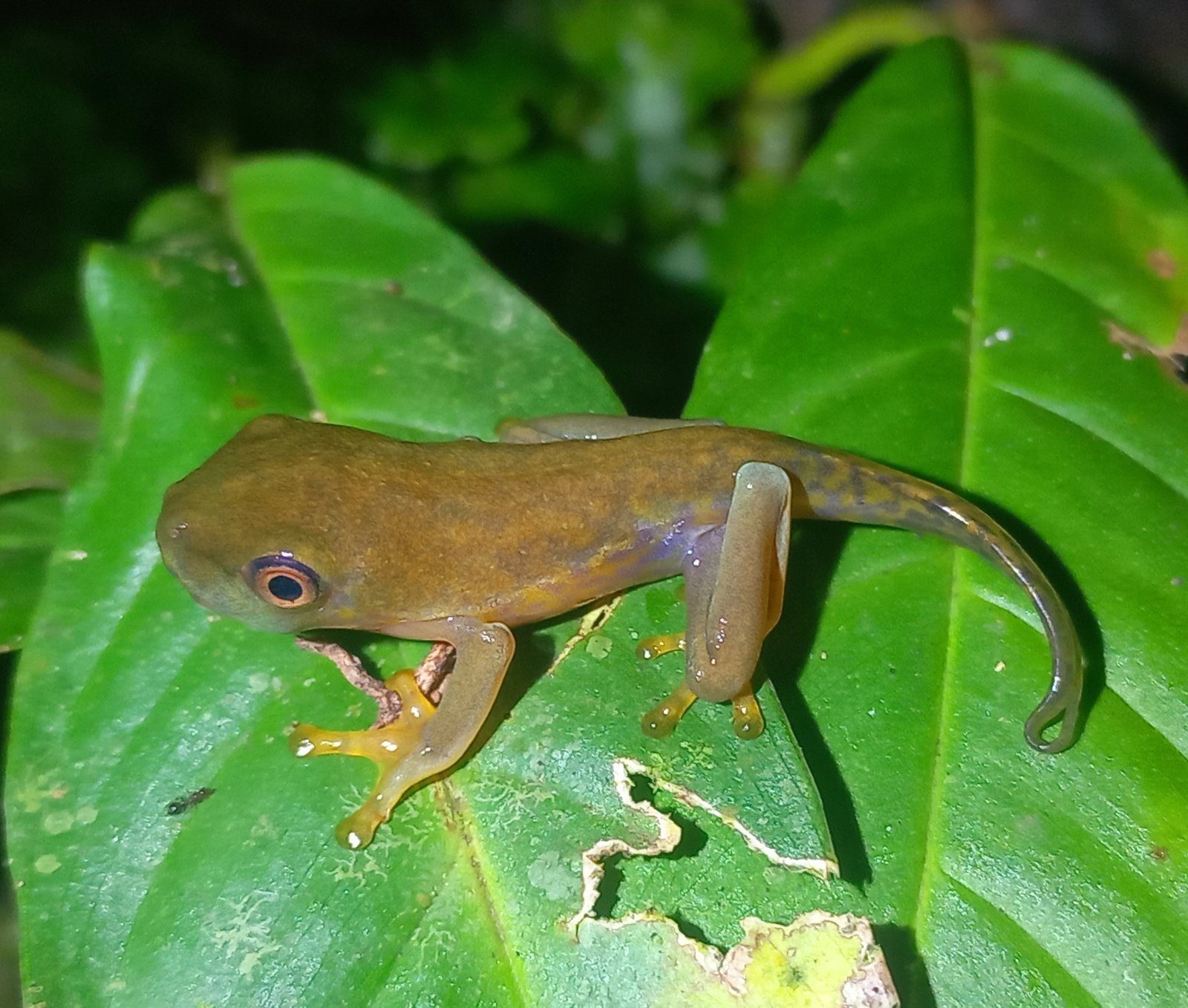
The easiest and most reliable answer to where to see red-eyed tree frogs in Costa Rica is on a guided night walk in La Fortuna, especially after warm, rainy evenings. You can also find them in other lowland rainforest areas, but La Fortuna gives families the best mix of access, safety, and high sighting odds.
The short answer: La Fortuna is your best bet
If you only have one shot at seeing a red-eyed tree frog in Costa Rica, make it La Fortuna. We’ve watched families spot them there on rainy nights with almost no effort beyond following a guide and keeping quiet. The area around La Fortuna has a strong mix of rainforest edges, humid creeks, and easy access from town, which makes evening wildlife walks very productive.
That does not mean red-eyed tree frogs only live in La Fortuna. They occur in humid lowland forests across much of the Caribbean side and northern lowlands. But for most travelers, especially with kids, La Fortuna is the place where the search feels simple instead of like a long science project.
Myth vs. reality: what travelers usually assume
Myth: You can find them anytime during the day
Reality: red-eyed tree frogs are nocturnal. During daylight they hide on the undersides of leaves, inside dense vegetation, or in damp cover where they blend in almost perfectly. If you walk a trail at noon expecting a bright green frog with red eyes, you’ll likely come back disappointed.
They are easiest to see shortly after dark, when guides use small beams of light to scan leaves, branches, and overhanging plants. That is why the phrase frogs Costa Rica night tour keeps coming up in trip planning. Night is when the frogs are active, visible, and easier to identify.
Myth: You need a remote jungle expedition
Reality: you usually do not. For most families, a well-run evening walk near La Fortuna is enough. We’ve seen travelers stress about needing deep jungle logistics, only to find the best sightings on an easy 2-hour outing close to town.
Myth: Any rainy forest is equally good
Reality: humidity matters, but so does access, trail quality, and guide skill. Rain encourages frog activity, yet you still want a place where guides know which plants, ponds, and forest edges to inspect without crowding the animals.
When red-eyed tree frogs are easiest to see
Red-eyed tree frogs are not random luck if you time it right. The best window is usually after sunset on warm, rainy nights, especially during the wetter months when insects are active and amphibians are more vocal.
A few practical patterns help:
-
Time of day: from about 6:00 PM to 9:00 PM is the sweet spot.
-
Weather: light rain or recent rain often improves sightings.
-
Season: the green season generally offers better odds than the driest weeks.
-
Temperature: warm nights are better than cool, windy ones.
-
Habitat: edges of forest, streams, gardens, and ponds can all work.
If you are planning a family trip, do not overthink the season. In Costa Rica, frogs can show up year-round. But on our last visits, the difference between a dry, breezy evening and a humid, drizzly one was obvious.
What they are doing at night
At night, red-eyed tree frogs come out to hunt insects and move through leaves and branches. They are most often seen perched on vegetation near water, where moisture stays high and breeding conditions are favorable.
You may see:
-
Adults resting on leaves
-
Frogs near ponds or slow-moving water
-
Males calling from branches after dark
-
Smaller frogs tucked into curled leaves
This is why guides often scan at eye level and above, not just the forest floor. The frogs do not usually sit in the open like a gecko on a wall. They choose leaves, stems, and shaded edges where they feel secure.
Where to look in Costa Rica beyond La Fortuna
La Fortuna is the easiest answer, but it is not the only one. If you are building a broader itinerary, the species can also be found in humid lowland rainforest zones on the Caribbean slope and in protected forest areas with enough moisture.
Good habitat tends to include:
-
Lowland rainforest near streams or ponds
-
Secondary forest and forest edges
-
Wet gardens and ecological reserves
-
Areas with active night tours and knowledgeable guides
For travelers already heading to Arenal, the combination is especially efficient. You can do daytime volcano, hanging bridge, or hot spring plans, then switch to a wildlife walk after dinner. If you are comparing options, our La Fortuna tours guide helps you match pace and age range.
Red-eyed tree frog La Fortuna: why it works so well
People search for red eyed tree frog la fortuna because the area checks all the boxes: humid forest, easy roads, lots of evening wildlife activity, and guides who know exactly where to pause and look. Families also appreciate that the walks are usually short, flat, and not physically demanding.
For younger kids, that matters. A 2-hour night walk feels adventurous without turning into a late-night hike. And because sightings often happen close to the trail, children do not have to stay silently in one place for long.
Best ways to see them ethically
Seeing a frog is great. Stressing it is not. The nicest wildlife moments happen when everyone acts like a guest, not a collector.
Keep these habits in mind:
-
Use your guide’s light, not your phone flash. A bright flash in the eyes can disturb nocturnal animals.
-
Stay on the trail. Off-trail steps can crush small creatures or damage the plants they use for cover.
-
Do not touch the frog. Even gentle handling can harm their skin.
-
Keep voices low. You do not need silence, but a calm tone helps.
-
Take one or two photos, then move along. Let everyone in the group have a turn.
Local tip: if you want better frog photos, ask the guide to stop the group before you open the camera app. The best shots usually happen when your hands are ready and the frog is still.
Signs of a good guide
The best guides do more than point and shine a light. They explain behavior, notice tiny movements in leaves, and keep the group from crowding the animal.
Look for a guide who:
-
Keeps the group small and manageable
-
Gives clear instructions before each stop
-
Knows frog calls and breeding patterns
-
Moves slowly so children can keep up
That’s especially important on any frogs Costa Rica night tour, because the difference between a rushed walk and a patient one is often the difference between one quick glimpse and three great sightings.
What a family-friendly night walk feels like
A good frog walk is usually easy, not exhausting. You meet before dark, walk slowly through a humid trail, and stop often. Kids tend to enjoy it because there is constant movement: frogs, insects, sleeping birds, and the occasional tarantula or kinkajou.
Our most family-friendly options are the ones that balance duration, age limits, and terrain:
-
Rainforest Night Walk — about 2 hours, from $53 USD per adult, easy, minimum age 4. This is a strong choice if red-eyed tree frogs are the main goal.
-
Night Excursion: Rainforest & Frog Walk — about 2 hours, from $50 USD per adult, easy, minimum age 5. This one includes a guided rainforest and frog-garden walk with a very family-friendly pace.
-
Canopy + Rainforest Night Walk — about 4 hours, from $97 USD per adult, moderate, minimum age 7. Good if you want a full wildlife day with a more active afternoon.
If you are comparing activities by animal focus, our wildlife category page is a useful starting point: wildlife tours in Costa Rica.
Which one fits which family?
-
Choose the 2-hour easy walks if your kids are under 10 or you want a gentle evening.
-
Choose the combo with canopy if your group likes a fuller outing and older children can handle a longer day.
-
Choose the organic farm night walk if you want a quieter setting and a more structured frog search.
Prices are current as of November 2026 and can shift by season, but these ranges are a realistic planning baseline.
What else you might see on the same walk
A red-eyed tree frog is the star, but the supporting cast is often excellent. We’ve had nights where the frog count was modest, yet the rest of the trail kept the kids talking for hours.
Common sightings on a good walk include:
-
Sleeping toucans tucked into branches
-
Kinkajous moving overhead
-
Tarantulas near roots or banks
-
Leaf litter frogs and other small amphibians
-
Nocturnal insects that light up the trail with activity
That variety is one reason the best wildlife outings are not just about one species. A patient guide can turn a simple walk into a whole-night safari without rushing the group.
What to wear and bring
You do not need special gear, but a little preparation helps:
-
Closed-toe shoes with grip
-
Light rain jacket or poncho
-
Bug repellent applied before the walk
-
Small camera or phone with night mode
-
A dry bag or zip pouch for electronics
-
For kids: a snack before departure, not during the walk
If you are traveling with younger children, bring a layer even in the tropics. Evening humidity can feel warm at first, then surprisingly cool after a rain shower.
How to build the easiest frog-finding plan
If your goal is simply to see the frog, keep the plan simple. Do not schedule a late dinner, a long drive, and an hour of souvenir shopping right before the tour.
A smooth family plan looks like this:
-
Arrive in La Fortuna before sunset.
-
Have an early dinner or eat before the walk.
-
Join a guided night outing around 6:00–7:00 PM.
-
Keep the following morning light and unhurried.
-
If your kids loved the walk, repeat wildlife time the next night rather than packing in too much.
That pacing matters. Families often enjoy Costa Rica more when nights are not too late and mornings are not fully booked.
You can also combine a night walk with a daytime Arenal activity, then leave the wildlife search to after dark. If you want a fuller mix of things to do in town, our La Fortuna wildlife tours page is the quickest way to compare options side by side.
The easiest answer, without overcomplicating it
If you want the most honest short answer to where to see red eyed tree frogs in Costa Rica, it is this: book a guided night walk in La Fortuna, go after rain if possible, and keep your expectations realistic. You are looking for a small, nocturnal animal in the right habitat, not a zoo-style guarantee.
For most travelers, especially families, that means one of two things: a simple 2-hour night walk, or a longer day that ends with wildlife after dark. Both can work very well if the pace stays calm and the group respects the animals.
Let's build your Costa Rica trip.
Browse locally-vetted tours, or tell us what you're dreaming up and we'll help shape it.
Common questions
What is the best place to see red-eyed tree frogs in Costa Rica?+
La Fortuna is usually the easiest and most reliable place, especially on a guided night walk in humid forest near town.
What time of night are red-eyed tree frogs most active?+
They are usually easiest to spot after sunset, often between 6:00 PM and 9:00 PM, especially on warm or rainy nights.
Do I need a night tour to see red-eyed tree frogs?+
For most travelers, yes. A guided night tour gives you the best odds because the frogs are nocturnal and hard to spot without help.
Are red-eyed tree frogs easy to see with kids?+
Yes, if you choose an easy, family-friendly walk. The La Fortuna night walks in this article are a good fit for children as young as 4 or 5, depending on the tour.
Can I see red-eyed tree frogs during the day?+
Sometimes, but it is much harder. During the day they hide under leaves or in dense vegetation, so night is far better.
What should I bring on a frog watching night tour?+
Closed-toe shoes, a light rain jacket, bug repellent, and a phone or camera with night mode are usually enough.
Is it okay to touch red-eyed tree frogs?+
No. It is best to observe them without touching. Their skin is delicate, and handling can stress or harm them.
Are red-eyed tree frogs found only in La Fortuna?+
No, they live in other humid lowland rainforest areas too, but La Fortuna is the most practical and family-friendly place to look for them.